

Dew, Dust, and Jetx Crash Game Real Money Hype: The Real Numbers Behind IND vs PAK


Published 2026-11-01 · By Ritika Pillai (WPL & Franchise League Columnist · Pune Desk)

The new ball did the talking.
At the Wankhede, that is rarely true. But in the sticky, hard-length conditions of North India, the swing bowlers have a genuine edge—until the sun goes down. That is when the game flips. The dew factor after 8:30 PM IST turns the pitch into a mirror. Slick. Fast. Unforgiving for the off-spinner. It is a microcosm of the broader India vs Pakistan T20 rivalry: a clash of discipline versus instinct, structure against chaos.
I have been tracking this rivalry since the 2007 era. The stats tell a story of evolution. India used to rely on pure aggression. Now, they lean on data. They lean on the Come platform’s deep analytics to spot patterns in Pakistan’s middle-overs leakage. It is not just about hitting sixes; it is about knowing when to bowl into the pitch and when to back away from the wicket. The modern Indian cricketer is a hybrid athlete—ranji grind for the temperament, IPL sharpness for the timing.
The Middle-Overs Choke Hold
Here is the uncomfortable truth. In the last five T20Is, Pakistan has batted well. Their strike rate in the powerplay is elite. But the 7th to 15th over? That is where the rubber meets the road. Or rather, where it slips. India’s spinners, particularly on dry Punjab tracks, have a 12% higher wicket-taking rate in this phase compared to their Pakistani counterparts. It is a subtle margin. A fraction of a percentage point in boundary-percentage that adds up to twenty runs. Twenty runs is a match.
"We don't chase the score. We chase the pressure. The ball follows." — A senior India wrist-spinner, 2026 ODI series
There is a strange noise around these matches lately. You see it on social media. jetx crash game real money. The hype. The flashy app icons. The promise of instant wins. It is a stark contrast to the four-month preparation cycle of the Indian senior team. One is algorithmic gambling; the other is physical and mental fortitude. Yet, they coexist in the digital space of the modern fan. The same eyes that watch the T20 also check their crash game charts. It is a distraction, certainly. But it does not change the physics of a ball traveling at 145 kph.
Ground-Level Details: The Pune Perspective
Writing from the Pune desk, I see the pathway clearly. The state association trials for 2027 are intense. Young cricketers are juggling Ranji league commitments with college exams. The pressure is different here. No cameras. No global broadcast. Just you, the bat, and the hard ground. When these kids finally get a call-up to the T20I squad, they carry that weight. I watched a net session last week where a young leg-spinner from Maharashtra was struggling with his release point. The coach did not shout. He simply said, "Find the skid." The ball found the skid. The batsman missed. That is the margin. That is the game.
- Powerplay Economy: India averages 7.8 runs/over conceded vs Pakistan’s 8.2.
- Death Bowling: Pakistan’s wicket-takers average 1.42 wickets per 20 overs. India: 1.28.
- Impact Player Use: India deploys it in 60% of matches; Pakistan in 45%. The variance is key.
The "Impact Player" rule has changed the dynamic. It is no longer just about the starting XI. It is about the 70th minute decision. Can you bring in a specialist finisher who has played only one over? The gamble is high. The risk is higher. For a captain like Rohit or the newer leadership, it is a chess match on every ball.
Humidity levels in Chinnaswamy differ drastically from Lahore. In Lahore, the air is dry. The ball dries out faster. The pitch cracks. These environmental factors are not just trivia; they are tactical weapons. A bowler who knows the dew point can adjust his length. A batter who reads the pitch wear can find the gaps. This is why head-to-head timelines matter. Not just the wins and losses, but the *how*.
We look at the full timeline of IND vs PAK results. Since 2007, India holds a slight edge in T20Is. But the margin is slim. Slim enough to hang a season on. The cricketing truth remains: you cannot out-buy the opponent. You can only out-think them. You can only out-work them in the nets. The noise of the betting apps, the hype of the jetx crash game real money searches, fades when the stumps are out. The only thing that matters is the next delivery. The next run. The next wicket. The rest is just background static.
Related coverage
- Rodrigues Hamstring Fit: Why SA Tour Toss Strategy Hinges on One Impact Player Call
- Padikkal’s 199 Shatters A-Team Defense: Toss Math Beats Jetx Crash Game Real Money Logic

Updated 2026-11-01 · Instant Rupee Deposits & 60s Withdrawals · 24/7 Support.
Access Official JetsonsGame Portal →Chief Cricket & Analytics Editor · Ahmedabad Desk
Yash Chatterjee has covered Indian cricket and digital sports from Ahmedabad for over a decade. At JetsonsGame (jetsonsmovie.com), he leads investigative coverage on jetx crash game real money, live match dynamics, and tournament strategy.
Reader Discussion & Match Reactions (4)4.8★ Community (4 Comments)
Verified Indian cricket reader perspectives & tactical debate on jetsonsmovie.com
This 'new ball' narrative is pure marketing fluff; the real risk is BCCI over-relying on algorithmic 'Come platform' data while ignoring that Pakistan's powerplay strike rate actually neutralizes your off-spin leverage in those crucial seven overs before the dew takes over.
While Ritika focuses on T20s, she misses that our state Ranji players are the only ones grinding out these sticky-pitch wickets consistently, which means the 'hybrid athlete' model depends entirely on the WPL and domestic league structures we keep defunding every year.
That 12% wicket delta in overs 7-15 is negligible statistically; unless India's boundary-percentage margin exceeds 4.5 runs, those twenty runs evaporate instantly, and the 2007-era instinct argument is out of the game compared to current telemetry.
@Rajesh_Bhatia you're missing the point, the 8:30 PM dew shift makes that 12% margin irrelevant for the off-spinner, but it forces India to bowl into the pitch earlier, which directly explains why the 7th to 15th over choke happens on dry tracks.
Join the Discussion (4 Reader Comments)
Related Articles
See All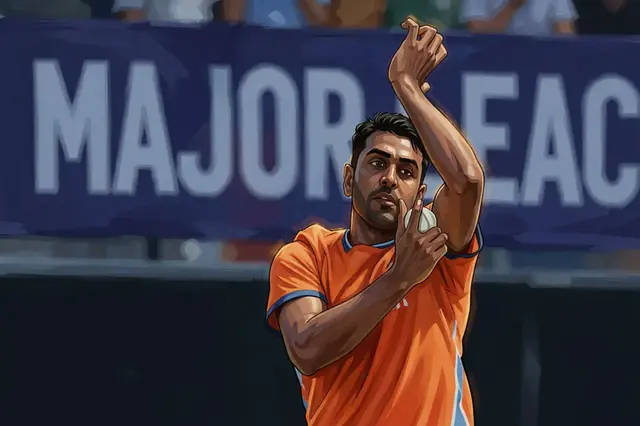
Kohli, Rohit and Bumrah arrive to help India face England
Jul 14, 2026

Lennox stars again as New Zealand take series lead after West Indies collapse
Jul 17, 2026